
Léna is also a Regional Manager for Writopia Lab whose mission is to foster joy, literacy, and critical thinking in kids and teens from all backgrounds through creative writing.

"Well, the question is, what do you want to believe? Do you want to live in a world where things are possible, or in one where they aren't?" Cin, Edges.

Showing posts with label Alcoholics Anonymous. Show all posts

Friday, July 29, 2011

I Have Something to Say about Amy Winehouse

Every author, like it or not, needs to develop a platform, an audience. I am no different, and have begun a long-term relationship with social media. For the past year and a half I have been grappling with how much of myself I should/want to reveal: I dance around the issue of addiction that is at the heart of Edges.  The death of Amy Winehouse has me thinking again about why my soul continued nagging at me to keep at it, to tell a part of Luke's story, of Ava's story.

I don't know anything about Amy Winehouse other than that she was prodigiously talented both at her music and at being a train wreck. She was 27, she never got help. Did she want it?

It won't be new to anybody that I've had a wild past, and have friends and family members die from their addiction - my uncle died from cirrhosis of the liver.

So, it's not going to be a far stretch to tell you that I have even more of a personal connection to alcoholism and recovery.

I was 25 years old and in the MA program for Drama Therapy at NYU when I realized that I wasn't going to be able to help anybody unless I took a hard look at myself. I looked good on paper, but I was spiritually bankrupt inside. I didn't want to/ didn't know how/ couldn't grow up. And I had a habit of picking friends and boyfriends who had bigger problems than I did, so I could always point to them as examples of how well I was doing. Ha!

I call myself an alcoholic because I need to remind myself of what happens when I drink, although I have been clean and sober for almost eighteen years. Recognizing my demon has enabled me to become more than I ever thought possible: a wife, a mom, a writer, a teacher, a friend.

I've always had a complicated but deeply personal relationship with God, with sobriety, and even with the concept of "help"- and I know I'm not alone in that.


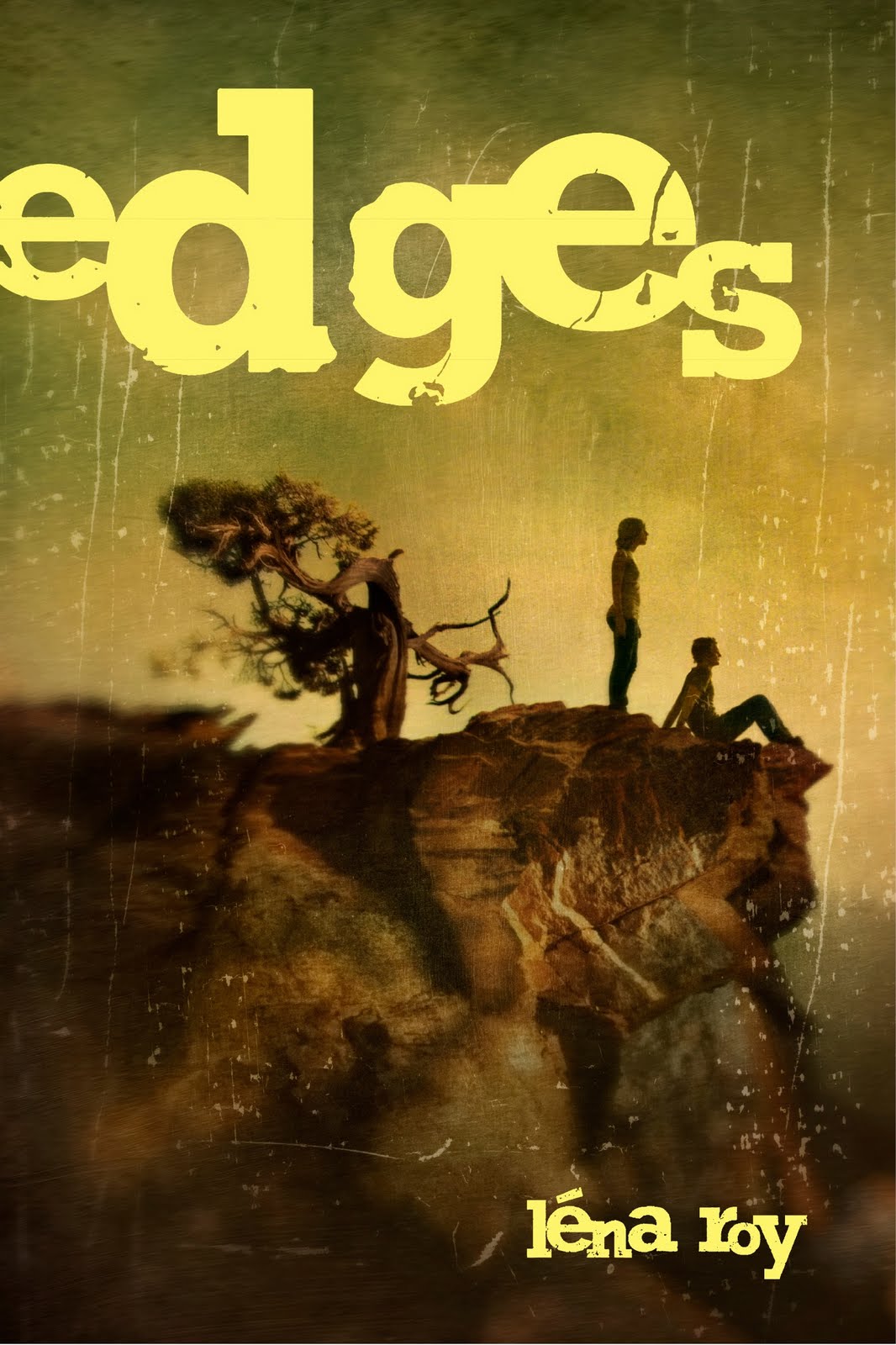
In Edges, Ava finds herself in an Alcoholics Anonymous meeting. She is surprised by the turns her life takes and also by the fact that it does not immediately make her life better. I portrayed the beginnings of sobriety as realistically as I could. Recovery and the way people talk about it can be very polarizing.  A. A. both helps millions of people, and of course it doesn't help just as many.  The statistics for getting and staying sober are very grim, but that doesn't mean twelve-step programs don't "work". That doesn't make it less valuable to the people who are able to regain control over their lives.

Amy Winehouse died of substance addiction, but her parents are saying that it wasn't the addiction but the withdrawl that killed her.

Please. That is so irresponsible.  (Even if it was withdrawl, it is still because of addiction.)

Still others are saying she had it coming - she had to pay for her outrageous behavior. FAIL. Really people?

It is hard to seek help, especially when there are people who are out there who are so much worse than we are. (Just look at Charlie Sheen, or Amy for that matter.) Especially when our own denial would seem to be saving our lives because it is too hard to look at our shameful behavior. And especially when alcoholism and addiction are still stigmatized.

Writing had been one of my ways out, of healing, of discovering and exploring who I am and what it means to be human.

In this instance, I started writing this post not sure about whether I would publish it or not. Then hours later, I ran into Leah Epstein at The Voracious Reader. She is a YA/MG writer and curator of The Drinking Diaries. We "know" each other from Twitter, but had never met in person. Leah bought a copy of Edges and then an hour later emailed me interview questions for The Drinking Diaries, all related to drinking.

If you are reading this, then I have published this post, and I am free to say I haven't had a drink or a drug since I was twenty-five years old, and that now my favorite drinks are coffee and/or seltzer with lime.


Enhanced by Zemanta

Wednesday, August 4, 2010

Author's Statement, take 2

At the risk of being redundant, I am posting the next draft of my Author's Statement, or, "Why I Wrote Edges". The feedback I got from Beth Potter at FSG and my publicist, Jessica Zimmerman, was very enthusiastic. They assured me the more personal, the better, and even though it would make it longer, they asked me to include a nod to my grandmother. So I've revised and tweaked because I can't help myself. What do you guys think?

EDGES was borne out of the year I spent in Moab, Utah. I had never heard of Moab before I went out west from New York City on vacation with a friend. We stayed at the Lazy Lizard Youth hostel where I met a cast of characters, including the man who would ultimately become my husband.

The surreal landscape of barren earth and red rocks called me to change my life, lobbied me to quickly, almost impulsively, quit my job as a Drama Therapist on the psychiatric floor of a hospital in the Bronx. It was meant to be: Moab’s Four Corners Community Mental Health Center needed someone to help start up an intensive out-patient program for teens.

My adventure to the desert shocked my family, friends, and most of all myself. Counseling teens in rural Utah? I was pushing the boundaries of my self-perception. To get on my feet, I stayed at the youth hostel where I had made some friends. Among the personalities at the hostel was a charismatic teen who had pitched a tent in the back and was ostensibly "living" there. Nobody knew his real story, and then one day after a long hike, I heard that this boy had moved on.

I’ve wondered about him ever since.

My work that year consumed me. I was naively shocked when a 14 year-old girl was sent to me for her habit of shooting crystal meth. She wound up in the hospital and an in-patient program. Most of the teens I worked with were court-ordered; it was all intervention and no prevention. I introduced them to a variety of tools, including behavioral therapy, the twelve steps of Alcoholics Anonymous and some outward-bound type hiking sessions. My faith in love and the universe was sorely tested treating these young men and women who were only seeking a way to transcend a hum-drum existence: drugs and alcohol replacing faith.

I was constantly asking myself questions. Aren’t we all seekers of some sort? Isn’t that what I was doing in Moab? Why is addiction so pervasive, and allowed to go unchecked? What road map can we offer kids who are lost, to help them find their way? Books have always been a kind of map for me, but I couldn’t find any fiction about the process of recovery. We all need some kind of guide, but our society trains us to use people, places and things in an addictive way, leaving us no room for faith in ourselves, let alone a Higher Power.

Years later, back in New York City, I had gone on to work as a high school counselor, was beginning to raise my own children and was helping take care of my aging grandmother, author Madeleine L’Engle. It was she who’d given me my first journal when I was a child, and though I always wrote, I’d never dared follow in her literary footsteps. She’d won the Newbery for A Wrinkle in Time and written over sixty books! My grandmother had always encouraged me spiritually and creatively, yet as her health declined she felt lost to me. It was only after she died that I felt her spirit again and found the persistence to finish a novel.

One morning seven years ago, the boy from the youth hostel figuratively tapped me on the shoulder and whispered the first scene of EDGES. I wrote furiously as if taking dictation. I called my protagonist Luke, and he was running away from his mother’s death and father’s alcoholism in New York City to a youth hostel in Moab, Utah.

I wrote the first draft in about three months, and then kept revising. At first I was obsessed with the crystal meth problem. I read great books with graphic depictions of the descent into addiction, but nothing about the journey beyond that addiction. I was more interested in asking: what happens when you take away the substance? Or, if like Luke, you just run away? What does it take to remain authentic, to maintain a sense of who we are when our perceptions of the world are challenged?

I write to map the world, and EDGES came from my desire to portray transcendence amidst bleakness, my interest in flirting with the edges of mysticism and insanity, my curiosity in challenging where our personal edges are.

Enhanced by Zemanta